Skip to content


Why does my dog lick me?
If you’ve ever sat down for a quiet moment only to find your dog enthusiastically licking your hand — or your face, or your ankle — you’re in good company. It’s one of the most common dog behaviours, and one of the most misunderstood.
The short answer is that it means several different things depending on context. Here’s what’s actually going on.
It started long before dogs were dogs
Long before dogs were domesticated, licking served very specific purposes in wild canine packs. Puppies would lick their mother’s mouth when she returned from a hunt – a behaviour that triggered her to regurgitate food for them. Licking was also how a mother cleaned and stimulated her newborns.
According to Dr. Alexandra Horowitz, head of the Dog Cognition Lab at Barnard College, Columbia University, this food-soliciting behaviour has evolved into a ritualised greeting for domesticated dogs — and over thousands of years of living alongside humans, it transferred from dog-to-dog communication to dog-to-human communication.
So why does my dog lick me specifically?
There are several reasons, and they’re not mutually exclusive:
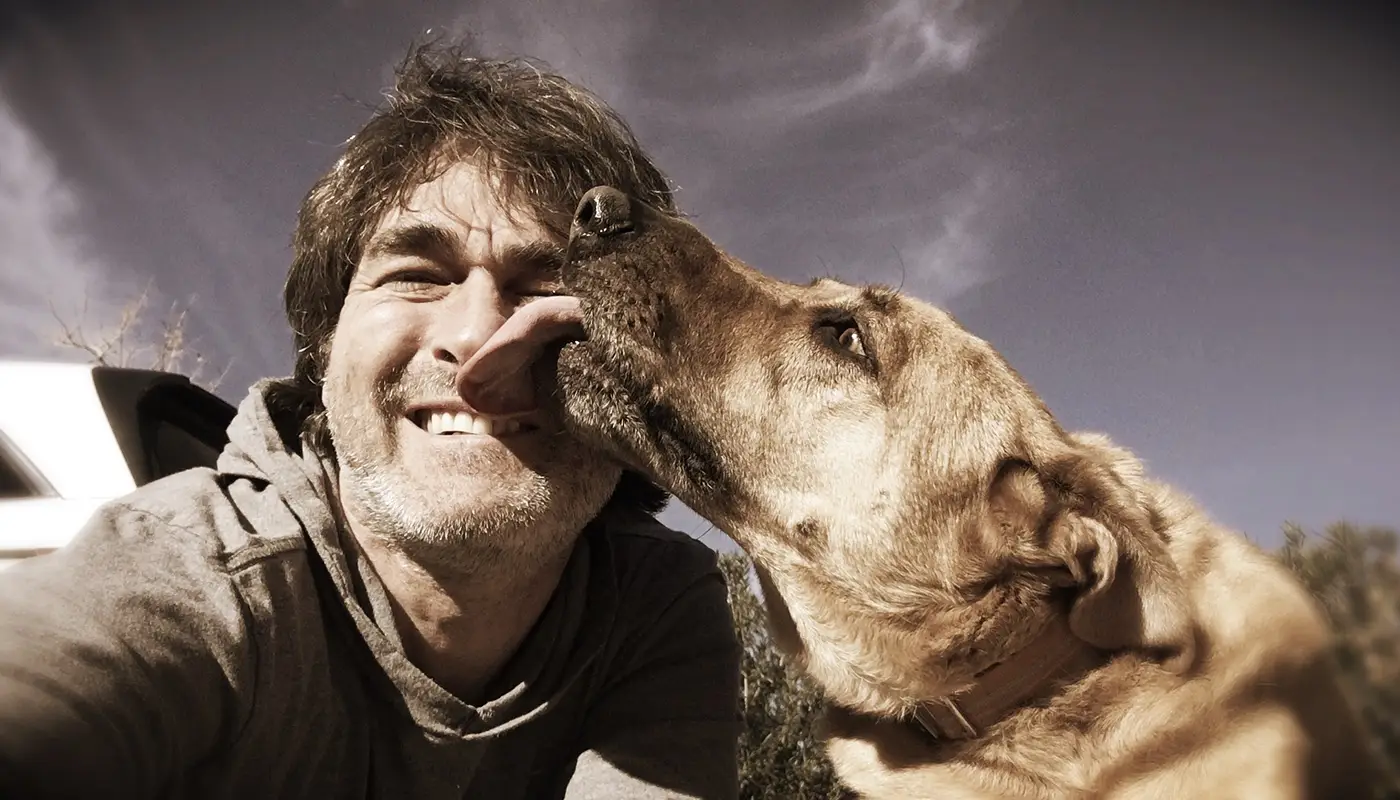
Affection and greeting. The most common reason. Licking is your dog’s version of a hello – a warm, if slightly wet, expression of their happiness to see you. As Dr. Emily Blackwell, a lecturer in companion animal behaviour at the University of Bristol, puts it: it’s essentially a social behaviour rooted in evolutionary history, and should be taken as a compliment.
You taste interesting. Human skin carries salt – especially after exercise – along with traces of food, lotion, or whatever you’ve touched recently. Dogs gather information through taste just as much as through smell, and licking is a form of exploration.
Attention-seeking. Dogs learn quickly that licking gets a reaction. Even a “stop it!” accompanied by waving your hands is, from your dog’s perspective, engagement – and engagement is rewarding.
Comfort and stress relief. Research has shown that licking releases endorphins in dogs, helping them feel calmer. It’s a self-soothing mechanism, which is why anxious dogs often lick more.
Empathy. A study published in Animal Cognition found that some dogs lick humans specifically when they sense distress – consistent with what researchers describe as empathetic behaviour. Your dog may not be able to ask “are you okay?” but they have other ways of checking in.
Why Does My Dog Always Go for the Face?
Because that’s exactly what puppies do with their mothers. Licking around the muzzle and mouth is an ancestral behaviour – originally a way to signal hunger and encourage regurgitation. Your face also carries more scent information than most other parts of your body, making it particularly interesting to a creature who experiences the world largely through smell.
Is it safe?
For most healthy adults, yes. Dog saliva is not inherently dangerous, and the idea that a dog’s mouth is cleaner than a human’s is a myth – but so is the idea that being licked is particularly risky.
The main exception: open wounds. Dog saliva contains bacteria including Capnocytophaga, which according to the CDC is present in around 74% of dogs without causing them any harm – but in very rare cases, particularly in people with weakened immune systems, it can cause serious infection in humans. If you have a cut or graze, redirect the licking. Otherwise, the risk is minimal.
There’s also a consideration in the other direction: whatever is on your skin – hand cream, certain foods, cleaning products – can be harmful to your dog. Be mindful of what you’ve applied before letting them lick your hands.
When licking becomes a concern
Occasional licking is entirely normal. Compulsive, repetitive licking — of you, of surfaces, of the same spot on their body — is worth paying attention to. It can signal:
- Anxiety or stress, where licking becomes a coping mechanism
- Pain or discomfort, particularly if they’re targeting a specific area of their own body
- Gastrointestinal issues, which in dogs often manifest as obsessive surface-licking
- Obsessive-compulsive behaviour, which a vet or behaviourist can help address
Can I train my dog to stop licking?
Yes – and without punishment. Scolding a dog for licking is counterproductive: from their perspective they were greeting you, and being pushed away is confusing and hurtful. The most effective approach is simply to remove the reward.
When your dog starts licking, calmly turn away or leave the room. When they stop, reward the calm behaviour with a quiet stroke. Over time, they’ll learn that licking doesn’t produce the response they’re looking for – but calm behaviour does. It’s the same principle behind all positive reinforcement-based training: you reward what you want, and withdraw attention from what you don’t.
If the licking is excessive and doesn’t respond to these adjustments, speak to your vet to rule out any underlying medical cause.