Skip to content

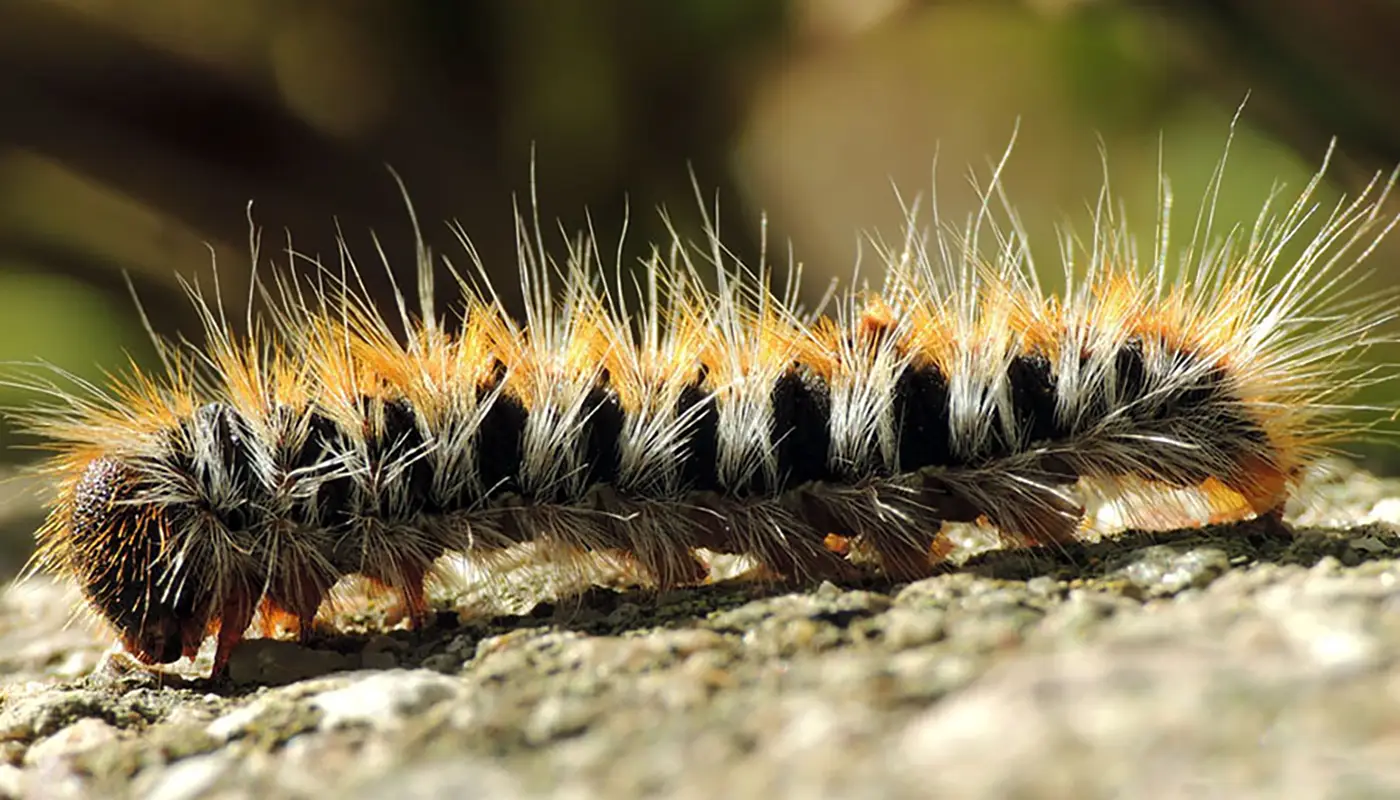
Pine processionary caterpillars and dogs: What every owner must know
If you’re visiting Corfu — or anywhere in Greece — with your dog between February and July, there’s one hidden danger you absolutely need to know about: pine processionary caterpillars.
These insects, known scientifically as Thaumetopoea pityocampa, live in pine trees and build large white cocoon-like nests that hang from the branches. From February onwards they begin descending to the ground, marching in long, distinctive lines — hence the name “processionary.” The warmer the weather, the earlier they appear.
Why Are They So Dangerous?
Each caterpillar is covered in microscopic hairs that contain a protein called thaumetopein. When these hairs make contact with skin or mucous membranes, they act like tiny capsules that burst on impact, releasing the protein and triggering a severe allergic reaction through the release of histamine.

Dogs are significantly more vulnerable than cats — and the reason is simple: curiosity. Dogs find those moving lines fascinating and instinctively want to sniff or lick them. The caterpillars respond defensively by releasing their toxic hairs, causing immediate and violent reactions around the mouth, tongue, and eyes.
There are two ways exposure can happen:
Direct contact — your dog sniffs, licks or steps on a caterpillar. Importantly, the toxin remains on their paws even after a long walk. If they later lick their feet, they are still at risk.
Airborne hairs — hairs shed inside the nests can be carried by the wind. This means your dog can be affected even without seeing a single caterpillar on the ground.
Symptoms — Act Immediately
Symptoms appear suddenly and escalate fast. A large-scale retrospective study of 109 dogs found that tongue lesions developed in 86% of cases, and that tongue necrosis was significantly more common when treatment was delayed beyond two hours. Watch for:
- Swelling of the lips, muzzle and face
- Excessive drooling
- Intense itching around the head and face
- Persistent rubbing of the muzzle on the ground
If the toxin reaches the tongue, the situation becomes serious very quickly. Affected tissue can develop necrosis — it dies, dries and falls away — and the infection spreads the longer you wait. Some dogs also experience vomiting, difficulty swallowing, or severe eye inflammation.
Unlike a typical insect sting — which usually causes generalised itching and swelling across the body — caterpillar reactions most commonly and severely affect the tongue and mouth. This distinction matters: if the swelling is concentrated around the muzzle and mouth, think caterpillars first.
Prevention
Completely avoiding caterpillars in pine-covered Greece isn’t realistic, but you can significantly reduce the risk:
- Avoid pine trees with visible white nests hanging from their branches
- Use a muzzle if your dog shows interest in anything moving on the ground near pine trees
- Treat nests in late summer or early autumn with pyrethrin-based insecticides, when caterpillars are still in the larval stage and most vulnerable
- Remove nests by cutting and burning affected branches (wear gloves and a mask)
- Install bat boxes near pine trees — local bats are natural predators of adult moths
What To Do If Your Dog Is Exposed
Do not rub the affected area — rubbing activates more hairs and releases additional toxin. According to veterinary emergency protocols, rinsing with warm (not cold) water for at least 10 minutes is recommended, as heat helps partially neutralise the toxin.
- Rinse the affected area thoroughly with plenty of warm water — low pressure, no rubbing
- Get to a vet immediately — treatment typically involves antibiotics and corticosteroids to slow the spread of infection
Do not crush the caterpillars underfoot — you risk transferring toxin on your shoes and carrying it indoors.